Future Proof Your Business Financial Forecasting

In today's dynamic business landscape, navigating uncertainty requires more than just reactive measures; it demands foresight and strategic planning. This is where financial forecasting becomes an indispensable tool for any organization aiming for sustainable growth and stability. By meticulously analyzing historical data and current trends, businesses can develop informed projections about their future financial performance, enabling proactive decision-making rather than merely responding to events as they unfold. It empowers leaders to anticipate potential challenges, identify emerging opportunities, and allocate resources effectively, ultimately shaping the company's trajectory for years to come.
Effective financial forecasting is not merely an academic exercise but a practical necessity that underpins virtually every critical business decision. From setting realistic budgets and managing cash flow to evaluating investment opportunities and assessing potential risks, accurate forecasts provide the bedrock of sound financial management. Without a clear financial roadmap, businesses operate in the dark, vulnerable to unforeseen market shifts, liquidity crises, and missed growth prospects.

A well-executed forecasting process offers a competitive edge by enabling agility and resilience. It allows companies to simulate various scenarios, understand their potential impact, and develop contingency plans. This forward-looking perspective minimizes surprises, fostering a more stable and predictable operating environment, even amidst economic volatility.
Ultimately, mastering financial forecasting transforms a business from a passive observer of market forces into an active shaper of its own destiny. It’s about leveraging data-driven insights to mitigate risks, seize opportunities, and ensure long-term profitability.

What is Financial Forecasting?

Financial forecasting is the process of estimating a company's future financial outcomes based on historical data, current market conditions, and anticipated trends. It involves using various techniques to predict revenue, expenses, profits, cash flows, and other key financial metrics over a specific period, typically ranging from a few months to several years. The core purpose is to provide management with a clear vision of potential financial scenarios, allowing for proactive strategic planning and resource allocation.

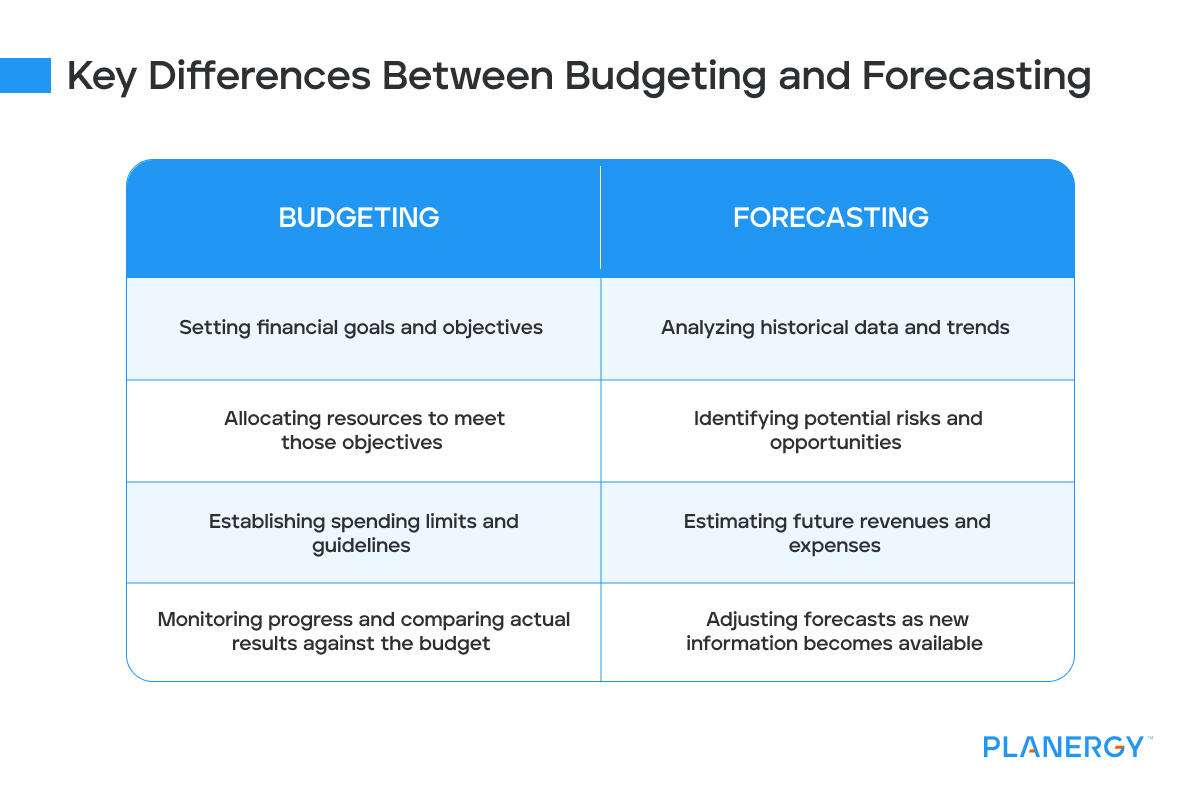
Unlike budgeting, which sets specific financial targets and limits, forecasting is more about predicting what will happen based on current information and assumptions. While budgets are often static for a fiscal year, forecasts are dynamic and should be regularly updated to reflect new information, changing market conditions, and evolving business strategies. This iterative process ensures that projections remain relevant and actionable.

Why is Financial Forecasting Crucial for Business Success?
The importance of financial forecasting cannot be overstated in modern business. It serves as the bedrock for strategic decision-making, providing clarity and direction in an often unpredictable world.
Strategic Planning and Goal Setting
Robust financial forecasts provide the foundation for an organization's strategic plan. By predicting future revenues, costs, and profits, businesses can set realistic and achievable goals, such as market expansion, product development, or operational efficiency improvements. It helps in formulating long-term objectives and aligning resources to meet them.
Budgeting and Resource Allocation
Forecasts directly inform the annual budgeting process. They help in determining how much capital is available for different departments, projects, and initiatives. Accurate predictions prevent overspending or underspending, ensuring that resources are allocated efficiently to maximize return on investment and avoid liquidity issues.

Cash Flow Management
One of the most critical aspects of financial health is cash flow. Forecasting helps businesses anticipate periods of cash surplus or deficit, allowing them to take timely action. This might involve securing lines of credit during projected lean times or strategically investing surplus cash during periods of abundance. Effective cash flow forecasting prevents financial crises and ensures operational continuity.
Risk Management and Scenario Planning
Uncertainty is inherent in business. Financial forecasting enables companies to identify potential risks, such as declining sales, rising costs, or economic downturns. By running different scenarios (e.g., best-case, worst-case, most likely), businesses can assess the potential impact of various events and develop contingency plans, enhancing their resilience.
Investor Relations and Funding
For businesses seeking external funding, accurate and well-supported financial forecasts are essential. Investors and lenders rely heavily on these projections to assess a company's viability, growth potential, and ability to repay debts. A credible forecast can significantly increase a company's attractiveness to potential funders.
Performance Measurement and Accountability
Financial forecasts establish benchmarks against which actual performance can be measured. Regular comparison of actual results to forecasts allows management to identify deviations, understand their causes, and hold departments or individuals accountable. This feedback loop is crucial for continuous improvement and operational adjustments.
Key Types of Financial Forecasting Methods
Various methods are employed in financial forecasting, ranging from simple to highly complex. The choice of method often depends on the available data, the level of detail required, and the specific purpose of the forecast.
Qualitative Forecasting Methods
These methods rely on expert opinions, market research, and subjective judgment, typically used when historical data is scarce or when significant market shifts are anticipated.
* Delphi Method: A structured communication technique, originally developed as a systematic, interactive forecasting method which relies on a panel of experts. The experts answer questionnaires in two or more rounds. After each round, a facilitator provides an anonymous summary of the experts' forecasts from the previous round as well as the reasons they provided for their judgments.
* Market Research: Gathering insights from customer surveys, focus groups, and industry reports to gauge future demand or market trends.
* Executive Opinion: Combining the knowledge and experience of top management and executives to form a consensus forecast.
Quantitative Forecasting Methods
These methods use statistical analysis and historical data to predict future outcomes. They are most effective when reliable historical data is available and trends are expected to continue.
* Trend Analysis: Analyzing past data to identify patterns or trends (e.g., linear, exponential, seasonal) and extrapolating them into the future. This is a common starting point for revenue forecasting.
* Regression Analysis: A statistical technique that models the relationship between a dependent variable (e.g., sales) and one or more independent variables (e.g., advertising spend, economic growth, customer demographics).
* Time Series Analysis: A more sophisticated approach that analyzes sequences of data points collected over time. Methods include Moving Averages, Exponential Smoothing, and ARIMA (AutoRegressive Integrated Moving Average) models, which account for trends, seasonality, and cyclical patterns.
* Econometric Models: Using economic theories and statistical techniques to forecast macroeconomic variables (e.g., GDP, inflation) and their impact on a business.
* Scenario Planning: Not a standalone method but an application of other methods. It involves developing multiple forecasts (e.g., optimistic, pessimistic, most likely) based on different sets of assumptions about future conditions. This helps in understanding potential outcomes under various circumstances.
Essential Components of a Robust Financial Forecast
A comprehensive and accurate financial forecasting model typically integrates several key financial statements and operational components.
Revenue Forecasting
This is often the starting point for any financial forecast, as most other components flow from anticipated sales. It involves predicting future sales volumes and pricing based on historical data, market trends, marketing initiatives, economic outlook, and competitive landscape. Different revenue streams should be forecasted separately for greater accuracy.
Expense Forecasting
Predicting future operating costs, including fixed expenses (rent, salaries, insurance) and variable expenses (cost of goods sold, utilities, commissions). Accurate expense forecasting helps in managing profitability and cash flow. It involves analyzing historical spending, anticipating changes in supplier costs, and accounting for planned operational changes.
Cash Flow Forecasting
Perhaps the most critical component, cash flow forecasting predicts the movement of cash into and out of the business over a specific period. It includes operating cash flows, investing cash flows, and financing cash flows. This forecast highlights potential liquidity issues or surpluses, enabling timely financial adjustments like seeking short-term loans or investing excess cash.
Balance Sheet Forecasting
Projecting future assets, liabilities, and equity balances. This component is crucial for understanding the company's future financial position. It links directly to the income statement and cash flow forecast, as changes in revenue and expenses, as well as cash movements, directly impact balance sheet accounts like accounts receivable, accounts payable, and retained earnings.
Capital Expenditure (CapEx) Forecasting
Estimating future spending on fixed assets such as property, plant, and equipment. CapEx forecasting is vital for long-term planning, as it impacts cash flow, depreciation expenses, and the overall asset base of the company.
Challenges in Financial Forecasting and How to Overcome Them
While vital, financial forecasting is fraught with challenges that can impact its accuracy and reliability. Overcoming these requires a structured approach and continuous refinement.
Data Quality and Availability
Challenge: Inaccurate, incomplete, or inconsistent historical data can lead to flawed forecasts. Lack of granular data can also limit the applicability of sophisticated quantitative methods.
Overcoming: Implement robust data collection and management systems. Ensure data consistency across departments. Invest in data cleansing and validation processes to ensure accuracy.
Market Volatility and Unforeseen Events
Challenge: Economic downturns, geopolitical events, technological disruptions, and sudden shifts in consumer behavior can render forecasts obsolete quickly.
Overcoming: Embrace scenario planning, developing multiple forecasts (optimistic, pessimistic, most likely) to account for different market conditions. Regularly update forecasts to incorporate new information and emerging trends. Build flexibility into financial plans.
Human Bias and Assumptions
Challenge: Forecasts can be influenced by overly optimistic or pessimistic assumptions made by the forecasters themselves or by management. "Sandbagging" (understating potential) or "hockey stick" projections (unrealistic rapid growth) are common.
Overcoming: Foster a culture of objectivity and critical evaluation. Use data-driven methods where possible to reduce subjective influence. Involve multiple stakeholders from different departments to challenge assumptions and provide diverse perspectives. Regularly review forecast accuracy against actuals to identify and correct biases.
Complexity and Computational Demands
Challenge: Building sophisticated forecasting models can be complex, requiring specialized skills and significant computational power, especially for large organizations with diverse operations.
Overcoming: Leverage modern financial forecasting software and tools that can automate data processing, apply advanced statistical models, and generate various scenarios. Invest in training for finance teams to enhance their analytical and modeling capabilities.
Lack of Integration Across Departments
Challenge: Forecasts prepared in isolation by the finance department may not fully reflect operational realities, marketing plans, or sales pipeline information.
Overcoming: Promote cross-functional collaboration. Ensure that sales, marketing, operations, and HR teams contribute their insights and data to the forecasting process. Integrate forecasting with strategic planning and operational planning cycles.
Best Practices for Effective Financial Forecasting
To truly future-proof your business through financial forecasting, adopting best practices is essential.
Regularly Review and Revise Forecasts
Forecasts are not set in stone. Market conditions, business strategies, and operational performance are constantly evolving. Implement a discipline of reviewing and updating forecasts monthly or quarterly to maintain their relevance and accuracy. This adaptive approach ensures your plans remain aligned with reality.
Utilize Technology and Automation
Modern financial planning and analysis (FP&A) software, enterprise resource planning (ERP) systems, and business intelligence (BI) tools can significantly enhance forecasting capabilities. These tools automate data collection, apply advanced algorithms, facilitate scenario modeling, and reduce manual errors, freeing up finance professionals for more strategic analysis.
Foster Cross-Functional Collaboration
Break down departmental silos. Sales, marketing, operations, human resources, and IT all hold valuable insights that can enrich a financial forecast. Encourage regular communication and data sharing to ensure that the forecast reflects the most comprehensive understanding of the business and its environment.
Focus on Key Drivers
Identify the most critical variables that significantly impact your revenue, costs, and cash flow. For example, for a retail business, these might be customer traffic, average transaction value, and inventory turnover. By accurately forecasting these key drivers, the overall financial forecast becomes more robust and actionable.
Implement Scenario Planning
Always create multiple scenarios: a base case (most likely), an optimistic case, and a pessimistic case. This prepares your business for a range of potential outcomes and allows for the development of contingency plans. Understanding the impact of different variables under varying conditions builds resilience.
Measure and Analyze Forecast Accuracy
Consistently compare your actual financial results against your forecasts. Analyze the variances to understand why discrepancies occurred. This feedback loop is crucial for identifying weaknesses in your forecasting process, refining assumptions, and improving future accuracy.
Future Trends Shaping Financial Forecasting
The landscape of financial forecasting is continually evolving, driven by technological advancements and the increasing demand for real-time insights.
Artificial Intelligence (AI) and Machine Learning (ML)
AI and ML algorithms are revolutionizing forecasting by processing vast datasets, identifying complex patterns, and making predictions with greater accuracy than traditional statistical methods. They can adapt to changing conditions, incorporate external data sources (e.g., social media sentiment, news events), and even identify unforeseen trends, leading to more dynamic and precise forecasts.
Big Data Analytics
The proliferation of data from various sources (customer interactions, IoT devices, supply chain sensors) provides unprecedented opportunities for richer and more granular forecasting. Leveraging big data analytics allows businesses to uncover deeper insights into customer behavior, operational efficiencies, and market dynamics, informing more detailed and accurate financial models.
Predictive Analytics
Moving beyond descriptive and diagnostic analytics, predictive analytics uses statistical algorithms and machine learning techniques to identify the likelihood of future outcomes based on historical data. In forecasting, this means not just knowing what happened or why, but what is likely to happen next, enabling truly proactive decision-making.
Real-time Forecasting and Rolling Forecasts
The move away from static annual forecasts towards continuous, real-time, or rolling forecasts is gaining momentum. This allows businesses to update their financial projections much more frequently, often weekly or even daily, reflecting the most current operational data and market conditions. This agility is crucial in fast-paced industries.
Conclusion
Financial forecasting is far more than a mere financial exercise; it is the strategic compass that guides your business through the complexities of the modern economic environment. By proactively estimating future financial performance, companies gain the foresight necessary to make informed decisions, allocate resources effectively, and navigate potential challenges with confidence. From robust strategic planning and efficient budgeting to resilient cash flow management and effective risk mitigation, accurate forecasting underpins every facet of sustainable business growth.
Embracing best practices, such as continuous review, leveraging advanced technology, fostering cross-functional collaboration, and employing scenario planning, will significantly enhance the accuracy and utility of your forecasts. As technology continues to advance with AI, machine learning, and big data, the capabilities of financial forecasting will only grow, offering even deeper insights and greater agility. By prioritizing and perfecting your financial forecasting processes, you are not just predicting the future; you are actively shaping a more secure and prosperous future for your business.