Business Model Canvas Blueprint for Growth

Navigating the complexities of business strategy in today's dynamic landscape can often feel like trying to solve a puzzle with missing pieces. Entrepreneurs, established businesses, and innovators alike frequently grapple with articulating their core value, understanding their customers, and identifying sustainable revenue streams. This is where the business model canvas emerges as an indispensable strategic management tool, offering a visual, holistic framework to describe, design, challenge, and invent business models. It provides a common language for exploring and analyzing business concepts, fostering clarity and alignment across teams.

Developed by Alexander Osterwalder and Yves Pigneur, the Business Model Canvas distills a complex business model into nine essential building blocks. Far from being a rigid template, it's a flexible instrument that encourages a comprehensive overview of a business or product. It helps in visualizing how different components of a business interact to create value, deliver it to customers, and generate revenue.

Its power lies in its simplicity and visual nature, enabling rapid prototyping and iteration of business ideas. Whether you're a startup looking to define your initial strategy, an existing company seeking to innovate or pivot, or a team trying to understand a competitor, the canvas offers a potent lens. It shifts focus from lengthy business plans to a more agile and interactive approach, facilitating better communication and shared understanding.

By mapping out the key elements of your business model on a single page, you gain unparalleled clarity. This clarity is crucial not just for internal strategic planning but also for communicating your vision effectively to stakeholders, investors, and potential partners. It highlights potential gaps, areas for improvement, and opportunities for innovation, setting the foundation for sustained growth and competitive advantage.

Understanding the Business Model Canvas

The Business Model Canvas is more than just a tool; it's a strategic language for describing and designing how an organization creates, delivers, and captures value. It replaces traditional, often cumbersome, business plans with a single-page visual chart, making the intricate workings of a business accessible and easy to understand. Each of the nine interconnected building blocks represents a crucial aspect of a business, from who your customers are to how you make money.

This framework encourages a systemic view, where changes in one block inevitably impact others. For instance, a decision to target a new customer segment might necessitate changes in your value proposition, channels, and even your key activities. This integrated perspective is vital for developing coherent and viable business models that can adapt to market changes and competitive pressures.
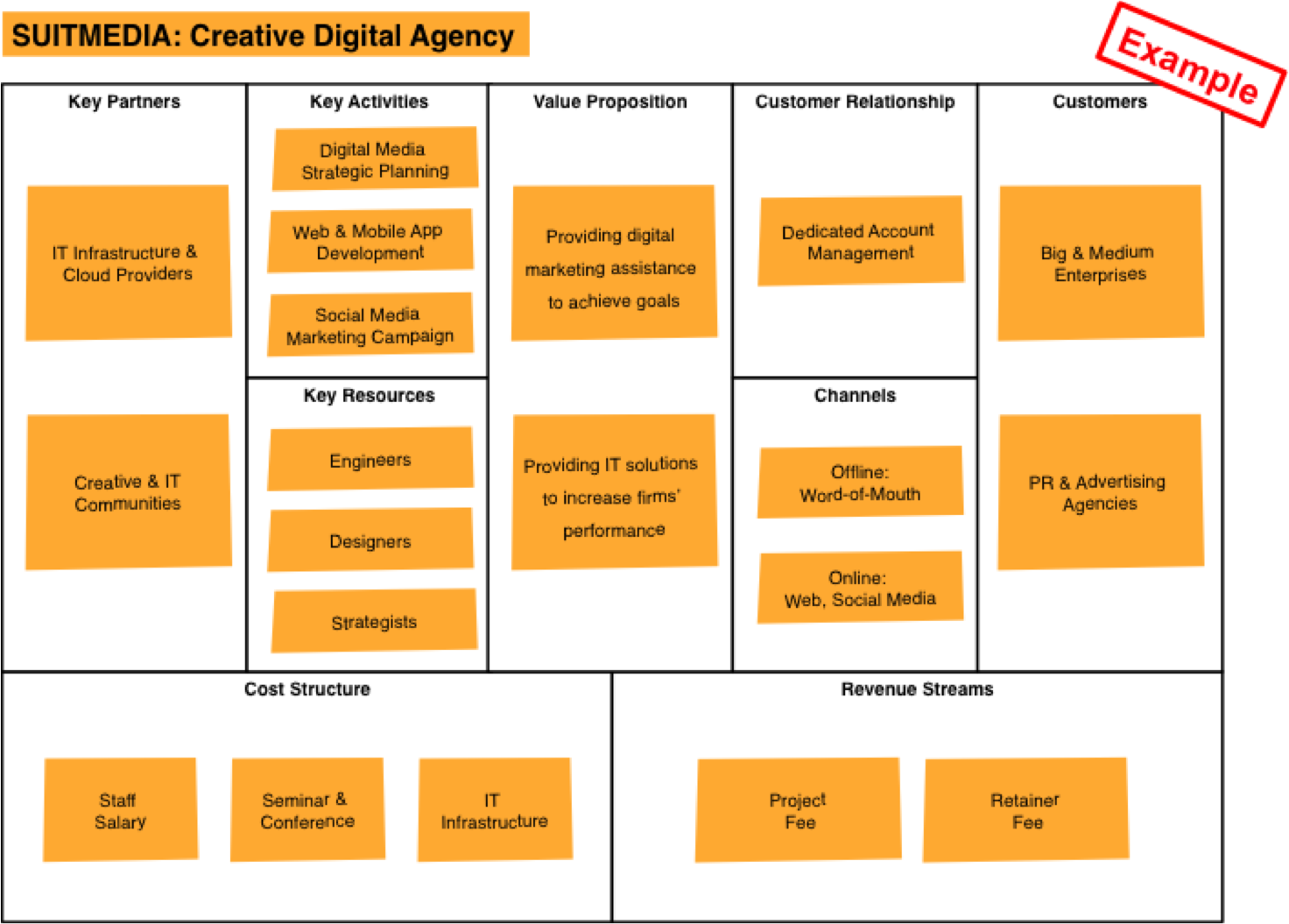
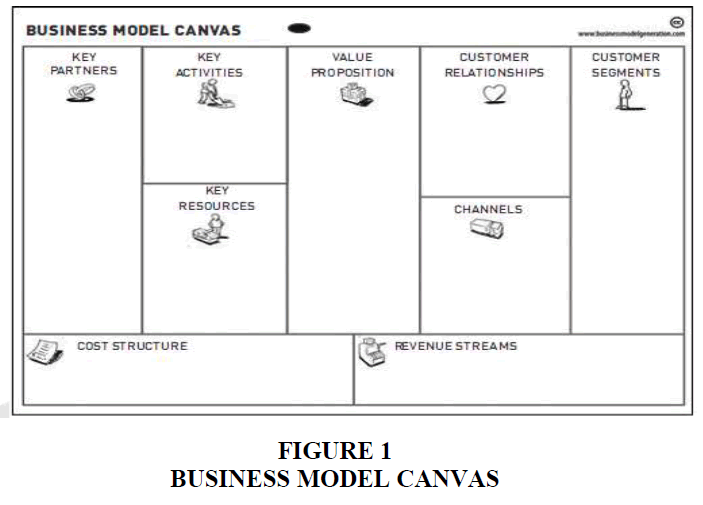
The Nine Building Blocks of the Business Model Canvas
The heart of the Business Model Canvas lies in its nine interconnected segments, each representing a distinct aspect of how a business operates. Understanding each block thoroughly is essential for effectively mapping out a business model.

Customer Segments
This block defines the different groups of people or organizations an enterprise aims to reach and serve. These are your target customers, and understanding their needs, behaviors, and motivations is paramount. A business model may serve one or several customer segments, and it's crucial to identify which segments you will target and why. For example, a software company might target small businesses, large enterprises, or both, each requiring a tailored approach.
Value Propositions
The Value Propositions block describes the bundle of products and services that create value for a specific Customer Segment. It's the reason why customers turn to one company over another; it solves a customer problem or satisfies a customer need. Value propositions can be quantitative (e.g., price, speed of service) or qualitative (e.g., design, customer experience). This is the core offering that distinguishes your business.

Channels
Channels describe how a company communicates with and reaches its Customer Segments to deliver a Value Proposition. This includes distribution channels, sales channels, and communication channels. Channels can be direct (e.g., sales force, web sales) or indirect (e.g., partner stores, wholesalers). They cover the entire customer journey, from awareness to after-sales support.
Customer Relationships
This block describes the types of relationships a company establishes with specific Customer Segments. Relationships can range from personal assistance (e.g., dedicated account manager) to automated services (e.g., self-service online portal). The type of relationship chosen significantly impacts the customer experience and often depends on the customer segment and value proposition.
Revenue Streams
Revenue Streams represent the cash a company generates from each Customer Segment. This block answers the crucial question: "How does your business make money?" Revenue streams can be transactional (e.g., one-time purchases) or recurring (e.g., subscriptions, licensing fees). Identifying clear and sustainable revenue streams is vital for a business's viability.
Key Resources
Key Resources describe the most important assets required to make a business model work. These resources can be physical (e.g., manufacturing facilities), intellectual (e.g., patents, brand), human (e.g., skilled employees), or financial (e.g., cash, credit lines). They are the foundational assets that enable a business to deliver its value proposition, reach markets, maintain relationships, and generate revenues.
Key Activities
Key Activities describe the most important things a company must do to make its business model work. These are the actions an organization must perform to deliver its value proposition, reach markets, maintain customer relationships, and earn revenues. Examples include production, problem-solving, platform/network management, and marketing.
Key Partnerships
This block describes the network of suppliers and partners that make the business model work. Partnerships are formed for various reasons, such as optimizing and economizing operations, reducing risk, or acquiring particular resources or activities. They can include strategic alliances between non-competitors, coopetition (strategic partnerships between competitors), joint ventures, and buyer-supplier relationships.
Cost Structure
The Cost Structure describes all costs incurred to operate a business model. This block identifies the most important costs inherent in operating under a particular business model. Cost structures can be either cost-driven (focused on minimizing costs, e.g., low-cost airlines) or value-driven (focused on creating value, with costs being less of a concern, e.g., luxury brands). It's crucial to understand the major cost drivers and how they relate to other building blocks.
Benefits of Leveraging the Business Model Canvas for Growth
The business model canvas offers a multitude of benefits that transcend simple planning, acting as a catalyst for growth and innovation within an organization. Its visual and structured approach enables a deeper understanding of the business ecosystem.
Firstly, it provides clarity and focus. By distilling the complexities of a business onto a single page, it forces teams to articulate their core strategy concisely. This clarity reduces ambiguity and ensures everyone is on the same page, fostering better internal communication and alignment.
Secondly, the canvas promotes rapid prototyping and iteration. Instead of spending months on a lengthy business plan, teams can quickly sketch out multiple business model ideas, test assumptions, and refine them. This agility is invaluable in fast-moving markets, allowing businesses to pivot quickly or adapt their strategies based on real-world feedback. It encourages an experimental mindset, where failure is seen as a learning opportunity rather than a setback.
Thirdly, it enhances strategic thinking and innovation. By visually connecting all nine building blocks, the canvas helps identify opportunities for innovation within existing models or for developing entirely new ones. It prompts questions like, "What if we changed our customer segment?" or "How could a new revenue stream impact our cost structure?" This interconnected view often sparks creative solutions and allows businesses to discover untapped potential.
Finally, the Business Model Canvas is an excellent tool for communication and collaboration. It provides a shared language for discussing business ideas, whether with internal teams, investors, or external partners. Presenting a business model on a canvas is far more engaging and understandable than a multi-page document, facilitating more productive discussions and accelerating decision-making processes. It acts as a living document that can be updated as the business evolves, ensuring continuous strategic relevance.
How to Effectively Utilize the Business Model Canvas
Effectively using the business model canvas goes beyond simply filling in the boxes; it involves a dynamic and iterative process. It's a tool for thinking, discussion, and continuous refinement.
Start by brainstorming and sketching. Gather your team and use a large printout of the canvas or a whiteboard. Begin with the Value Proposition and Customer Segments, as these are often the core. Then, move to Channels, Customer Relationships, and Revenue Streams (the "right side" of the canvas, focusing on value creation and delivery). Subsequently, address Key Resources, Key Activities, and Key Partnerships (the "left side," focusing on operational efficiency). Finally, complete the Cost Structure. Don't aim for perfection in the first pass; aim for capturing initial thoughts.
Validate your assumptions. The canvas is built on assumptions about your customers, value, costs, and revenues. Crucially, these assumptions need to be tested in the real world. This involves conducting customer interviews, running small experiments (e.g., A/B testing, landing page tests), and analyzing market data. The insights gained from validation will inform revisions to your canvas. Remember, a business model is a hypothesis until proven.
Iterate and refine. Based on your validation efforts, be prepared to revise your canvas frequently. This iterative process is where the real value of the canvas lies. Each iteration refines your understanding of your business and market, leading to a more robust and viable model. Don't be afraid to create multiple versions of your canvas, exploring different scenarios and pivots.
Use it for various purposes. The canvas isn't just for startups. Existing businesses can use it to map their current operations, identify areas for improvement, or design new products/services. It's also excellent for analyzing competitors, understanding their value proposition, and identifying their key resources and activities. For strategic planning, it helps visualize potential impacts of strategic decisions across the entire business.
Beyond the Canvas: Iteration and Validation
While the Business Model Canvas is a powerful tool for conceptualizing and designing a business, its true potential is unleashed through continuous iteration and rigorous validation. The canvas is not a static document but a living hypothesis that evolves as you gather more information and insights.
Once you have a preliminary canvas, the next crucial step is to step out of the office and test your assumptions. This means talking to potential customers, observing their behaviors, and experimenting with different elements of your proposed business model. For example, if your canvas suggests a particular channel, you might run a small pilot campaign to see if it effectively reaches your target segment. If your value proposition includes a specific feature, you might create a low-fidelity prototype to gauge customer interest and willingness to pay.
This process of customer discovery and lean experimentation is fundamental. It helps you quickly identify which parts of your business model are viable and which need to be adjusted or even discarded. Often, the initial assumptions about customer needs, channels, or revenue streams turn out to be incorrect, and it’s far better to discover this early on, before significant resources are committed.
Each learning loop from validation feeds back into your Business Model Canvas. You might discover that your assumed customer segment isn't interested in your value proposition, leading you to redefine both. Or perhaps a different revenue stream proves more sustainable than initially thought. These adjustments are not failures; they are critical steps in refining your path to market fit and sustainable growth. The most successful businesses are those that are adept at rapidly iterating their business models based on continuous learning and adaptation.
Conclusion
The business model canvas stands as an indispensable tool for anyone seeking to understand, design, or innovate a business. Its intuitive visual format and comprehensive breakdown into nine core building blocks offer unparalleled clarity and a shared language for strategic discussions. By mapping out Customer Segments, Value Propositions, Channels, Customer Relationships, Revenue Streams, Key Resources, Key Activities, Key Partnerships, and Cost Structure, individuals and teams can gain a holistic view of their business model.
Embracing the Business Model Canvas fosters a culture of strategic thinking, rapid prototyping, and continuous iteration. It moves away from lengthy, static business plans towards an agile, adaptable approach that is crucial in today's fast-evolving market. By using the canvas to brainstorm, validate assumptions, and refine ideas, businesses can identify opportunities for innovation, mitigate risks, and develop robust strategies for sustainable growth. It's more than just a framework; it's a dynamic blueprint for shaping and evolving your business future.